Guest blog: We don’t have a patch. And that’s the point.
In this guest blog, Ayisatu Oladunni-Scrivens of GM Equality Alliance (GM=EqAl) explains the role of a pan-GM Equity Partner in Live Well Spaces of Hope and Connection. GM=EqAl has no single patch: its knowledge is held collectively through a network spanning every borough and protected characteristic, giving it an intersectional view of what place-based systems miss.
Author
Ayisatu Oladunni-Scrivens, Partnership Manager at GM=EqAl
Published
Type
Guest Blog
Theme
Live Well
Thanks to National Lottery players, 10GM, on behalf of Greater Manchester Live Well, will receive £16.5 million over four years from The National Lottery Community Fund, the UK’s largest community funder.
This investment in Live Well Spaces of Hope and Connection will create a network of 100+ inclusive, community-led and owned spaces across Greater Manchester where people can meet, belong and find everyday support.
Prioritising communities facing the greatest inequalities, the investment will strengthen social infrastructure and grow community action, power and wealth. Powered by the Live Well movement, VCSE organisations, public services and residents will come together to share power, change systems and shape healthier, fairer, more connected places.
When people ask where GM=EqAl is based, I always pause.
The honest answer isn’t a place. We have members and connections in every borough, across every protected characteristic – but no single person here holds that knowledge directly. We hold it collectively, through a network we rely on heavily, and rightly, for the depth and lived experience we could never claim to have ourselves as a unit. Our reach is real, but our knowledge will never be complete – especially as communities across Greater Manchester continue to evolve, arrive and connect with us.
“What we can offer instead is a strategic view across all of it: an intersectional lens that catches what gets missed when a system only sees one part of someone’s identity at a time.”
Being able to speak confidently about what this role is feels straightforward – right up until I try to say it out loud.
Part of the answer is ambition. Live Well Spaces of Hope and Connection is a significant investment, and it’s taking on a lot across Greater Manchester. Holding the scale of what’s possible alongside the people who could slip between the lines is most of the job.
In a region built around ten local authority areas, that collective, no-single-patch position is exactly the role we hold: pan-GM Equity Partner in Live Well Spaces of Hope and Connection. We work with communities that don’t organise primarily around a place: faith, shared cultural heritage, migration experience, disability, sexuality – communities whose networks run across borough lines, and ‘which local authority are you in?’ often misses the point.
Why does that need its own seat, rather than goodwill from everyone else at the table? Equity is everyone’s responsibility, but that doesn’t remove the need for someone whose job is to hold it. It’s the same logic as safeguarding: everyone in the room is responsible for it, and it still needs a named lead, someone whose role is to ask the awkward question and make sure nothing slips. That’s the value an equity partner adds: not a critical friend circling the work from outside, but as someone inside the work, building the confidence and bravery it takes to do this well, not just avoid doing it badly. It means being answerable, too. When communities have asked us who checks that GM=EqAl is doing a good job, the honest answer is: we’re still working that out.
“An equity partner that can’t be held accountable by the communities it serves isn’t really one.”
We already know what happens without that check in place. Our own Live Well microgrant pilot could fund 22 organisations. We received 145 applications – more than six for every place. That tells us how much community-led activity is out there, and how much of it is hard for locality-based funding to see. As our own grant applicant put it: “We struggle to secure funding because our communities are geographically dispersed, lacking a central hub. This makes them less visible to funders prioritising locality-based areas.” That’s unmet need, counted, in an applicant’s own words, and is the kind of demand the investment in Live Well Spaces of Hope and Connection is helping us begin to meet.
Because here’s what a place-based model can’t quite see: your needs don’t stay still just because your postcode does. Think about the five ways of wellbeing – Connect, Be Active, Keep Learning, Give, Take Notice. What does it mean to Connect when the only people who speak your first language, share your faith, or would recognise you at an LGBTQ+ space live an hour’s bus ride away, if you can find them at all? What does it mean to Be Active as a disabled person when local activities were never designed with you in mind, and the ones that were are two boroughs over? The same goes for Keep Learning, Give and Take Notice. The course you need might be online, but only funded for people elsewhere, and you might not be able to afford the data to get online, or the bus fare to where your community gathers. Unemployment or the cost of getting by can narrow your world to walking distance. Some people miss support when they need it, or never find it at all. None of that is a neighbourhood failing. It’s what happens when every solution is drawn at the same geographic scale, and identity, income, and access refuse to sit still inside it.
What that looks like, in practice, is smaller than any of this. It looks like visiting a women’s group on a Friday afternoon, eating lunch together, and hearing about an informal peer support network that has grown without any programme funding. It reaches thirty women a week, filling a gap commissioned services were never designed to fill. It means asking who isn’t in the room, and what it would take to reach them, as well as what communities need. And it means recognising that for a community organised around who you are rather than where you live, “space” might be a WhatsApp group or a monthly gathering, not bricks, mortar, and opening hours.
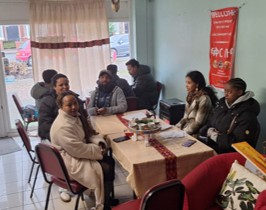
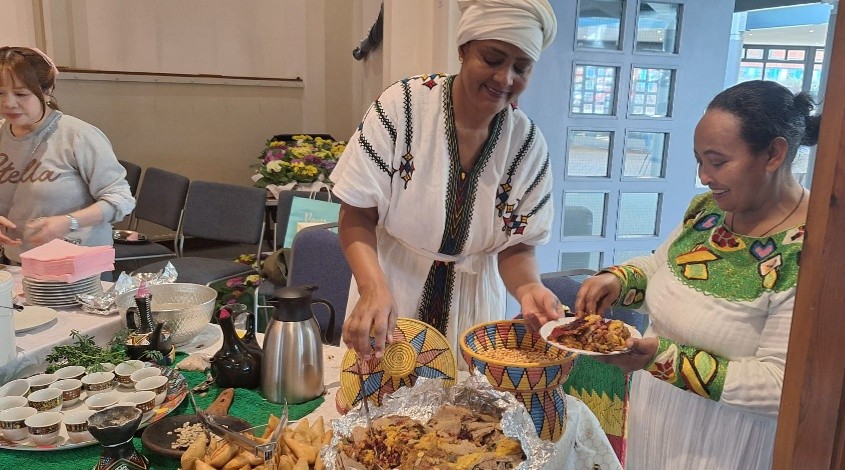
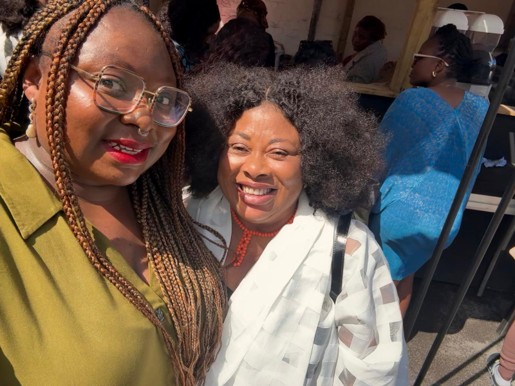
Coffee, Culture and Conversation session run by Selam Language and Culture as part of the Inclusion and Wellbeing Partnership fund pilot (funded via the Live Well Community Fund)
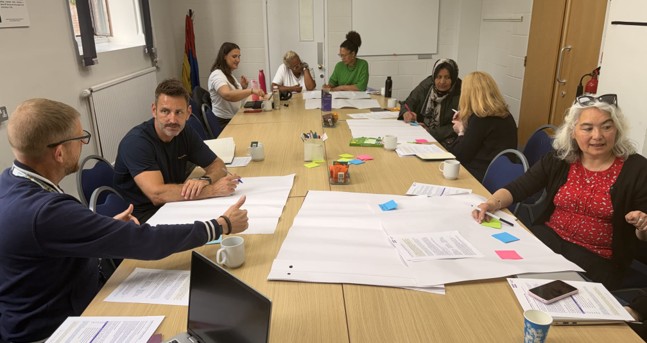
Our co-design work is still thin in places, and we know it. Co-design spaces tend to reach the same networks, and the communities with the least capacity are often the hardest to reach through formal processes. So we’re going to where communities already are, building the relationships that make a formal process possible later, rather than waiting for people to find their way into ours. What comes out of that is less tidy. It’s also more honest.
Something is shifting in how the wider programme understands this role. Equity is becoming a question for every workstream, rather than a separate strand handled elsewhere. That shift is gradual. But it’s real, and small, real shifts are where lasting change begins.
I’m working towards a Greater Manchester where the communities most often left out of big decisions are structurally positioned to shape them, and where infrastructure for identity is recognised and resourced alongside infrastructure for place.
“We don’t have a patch. We never will. And that’s the point.”
About the author
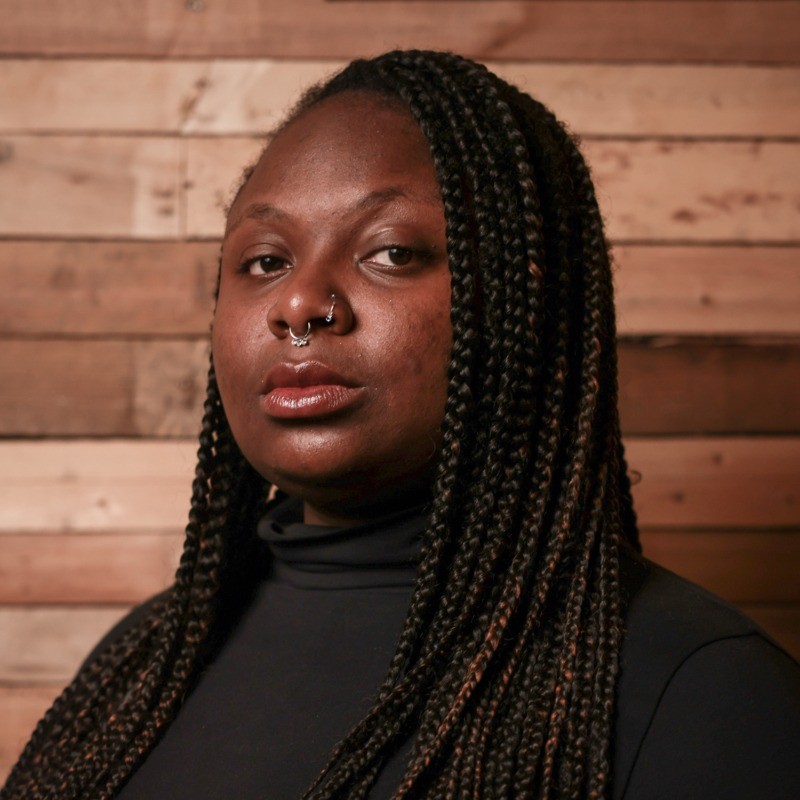
Ayisatu Oladunni-Scrivens
(Ah-Yee-Shah-two) ( She/Her)
Ayisatu is Partnership Manager at GM=EqAl, the Greater Manchester Equality Alliance, where she leads its role as the pan-GM Equity Partner in Live Well Spaces of Hope and Connection. She is a people person with a systems brain and a heart for justice. She works alongside 10GM, local infrastructure organisations and the Innovation Unit to hold the equity lens across the programme, so that communities whose lives and identities cross borough boundaries are not left at the edges of place-based work.
Ayisatu helps people and organisations across Greater Manchester’s equalities communities connect, challenge and co-create with those shaping our public services. She champions community-led brilliance and is shaking up how we think about the inclusion of Lived Experience in Policy and Strategy development.
She is passionate about making complex systems feel more human and less like mazes. That means clearer processes, kinder collaborations, and making sure people with lived experience are not only in the room, but shaping the agenda and bettering outcomes.
Find out more about Live Well

10GM Blog: Growing a Shared Vision for Live Well Spaces of Hope and Connection
Over the past few months, we’ve brought partners, communities and local leaders together to start shaping a shared vision for Live Well Spaces of Hope and Connection.
In this blog, Sarah tells you what we heard, and what happens next.
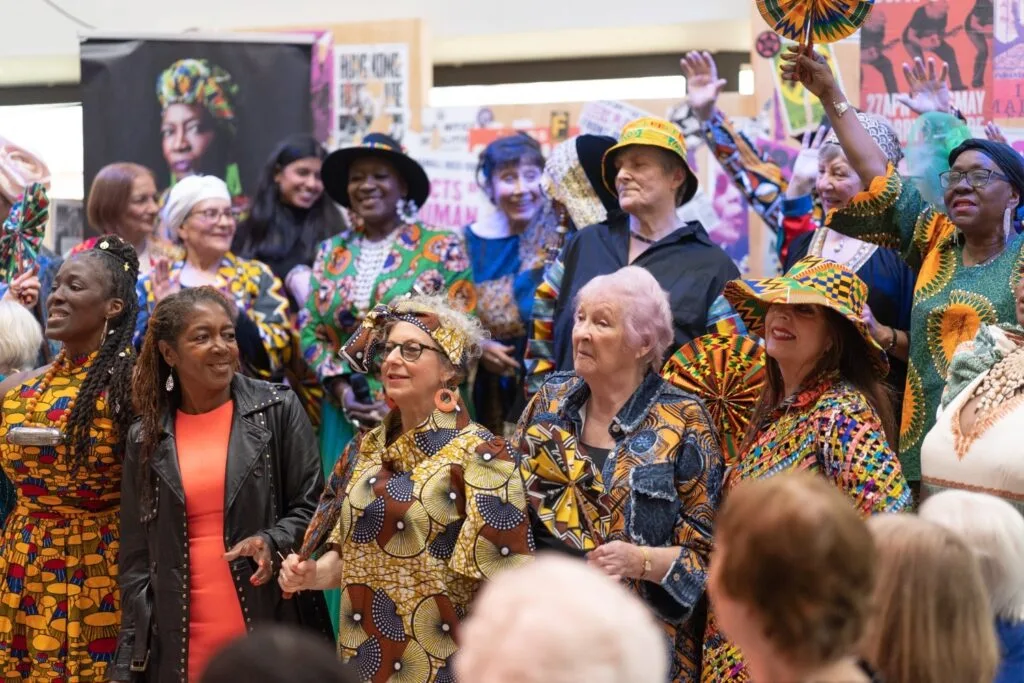
Live Well Spaces of Hope and Connection
Thanks to National Lottery players, 10GM, on behalf of Greater Manchester Live Well, will receive £16.5 million over four years from The National Lottery Community Fund, the UK’s largest community funder.
This investment in Live Well Spaces of Hope and Connection will create a network of 100+ inclusive, community-led and owned spaces across Greater Manchester where people can meet, belong and find everyday support.
